Handmade Dot Mandala, Lippan & Crochet Creations

MerakiBySeema

Our shop is coming soon. Every piece is painted and sculpted by hand, made with love, soul and creativity.

Questions or custom orders? merakibyseemastudio@gmail.com

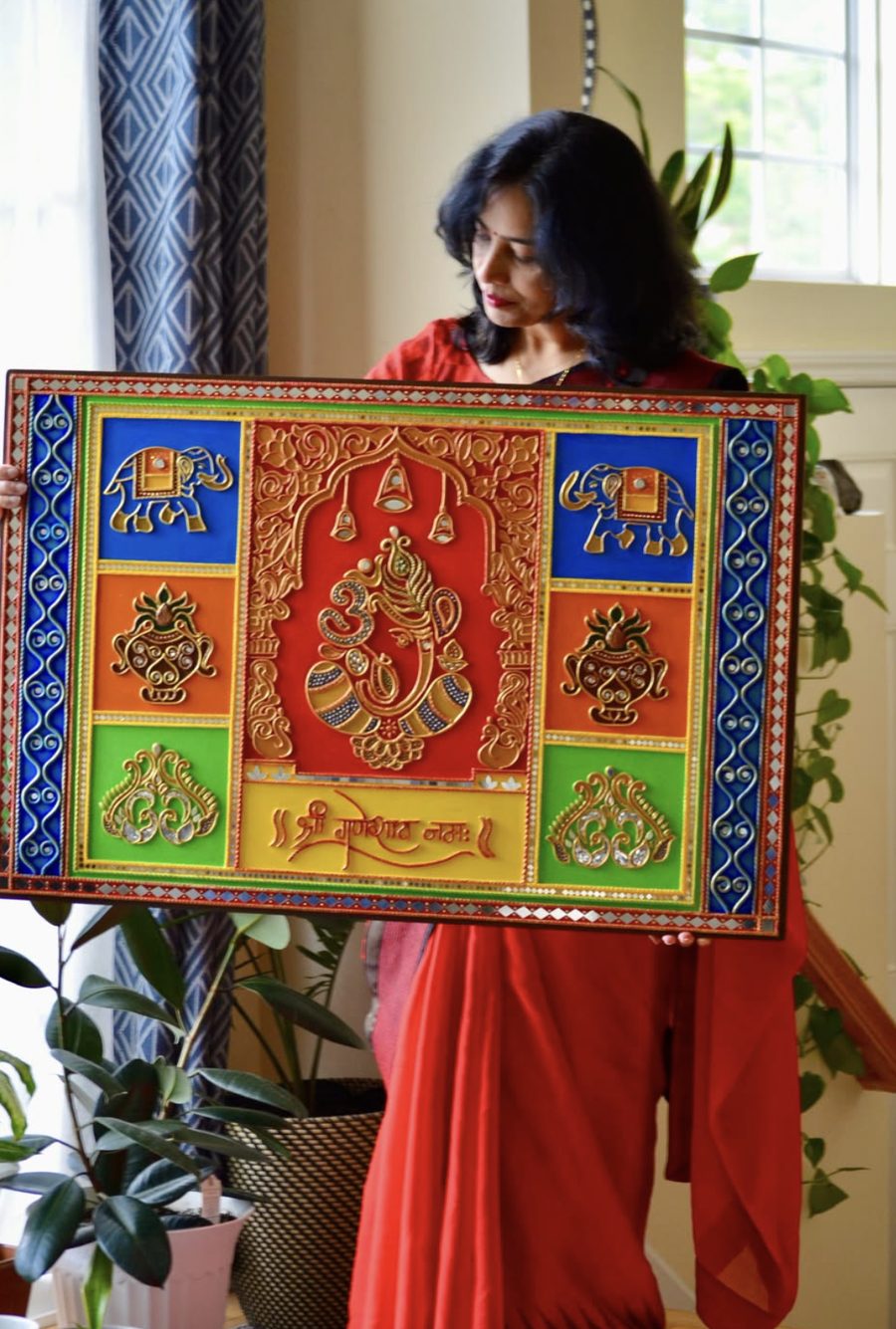
Seema, the artist behind MerakiBySeema, holding a handmade Lippan art panel of Ganesha

Lippan art

Lippan art, also called mud and mirror work, comes from the Kutch region of Gujarat. Pastoral communities such as the Rabari, Kumbhar and Mutwa have practiced it for centuries, decorating the walls of their circular mud huts (bhungas) with clay relief and small mirrors. The mirrors reflect lamplight inside the home, and the Rabari also believe they ward off the evil eye. Its exact origins are undocumented and survive mainly through oral tradition.

Dot mandala art

Dot mandala art draws on the mandala, a word from Sanskrit meaning "circle", which is central to Hindu and Buddhist traditions. The earliest evidence of Buddhist mandala art dates to around the first century BCE, and the central dot (bindu) is traditionally seen as the starting point of contemplation. Dot mandala painting as a craft, done with dotting tools on paper, canvas or stone, appears to be a modern adaptation of this tradition. I found no reliable source on exactly when or where it began.

Crochet

Crochet's origins are unclear. The first substantial evidence of crocheted fabric appears in Europe in the 19th century. In Europe it probably developed from tambour embroidery, a hooked-needle technique that came from Asia. Irish crochet lace became especially important in the mid-19th century. It imitated costly Venetian lace, and during the Great Famine of 1845–1849 it gave women a way to earn income. Crochet's popularity declined in the 20th century and revived from the late 1960s onward.